
How to Plan Waterfront Cocktail Hour Music for a Miami Wedding


In Miami, the cocktail hour often becomes the moment guests remember most clearly: the sun softens over Biscayne Bay, the formalities pause, and everyone settles into the celebration. Live music can make that transition feel effortless, but a waterfront setting adds practical questions about heat, wind, rain, power, and sound coverage. The best plan balances South Florida atmosphere with a backup that is just as intentional as the outdoor vision.
Couples searching for a jazz band in Miami should begin with the guest experience rather than a fixed song list. Decide how people should feel as they leave the ceremony, find a drink, and reconnect with friends. From there, the ensemble, placement, repertoire, and weather plan can all support the same mood.
Start with the transition, not the first song
Cocktail hour music begins before the first cocktail is poured. Map the route guests will take from the ceremony to the terrace, lawn, courtyard, or ballroom foyer. If the walk takes several minutes, ask whether music will be audible along the way or only after guests arrive. A short musical cue as the ceremony ends can signal that the celebration is changing gears.
In Coconut Grove, Coral Gables, Miami Beach, or Brickell, indoor and outdoor spaces may sit on different levels or opposite sides of a property. Give the band a clear load-in route and enough setup time so guests never watch equipment being moved. When the musicians are ready before the ceremony ends, the transition feels polished rather than improvised.
Choose a sound that fits the view
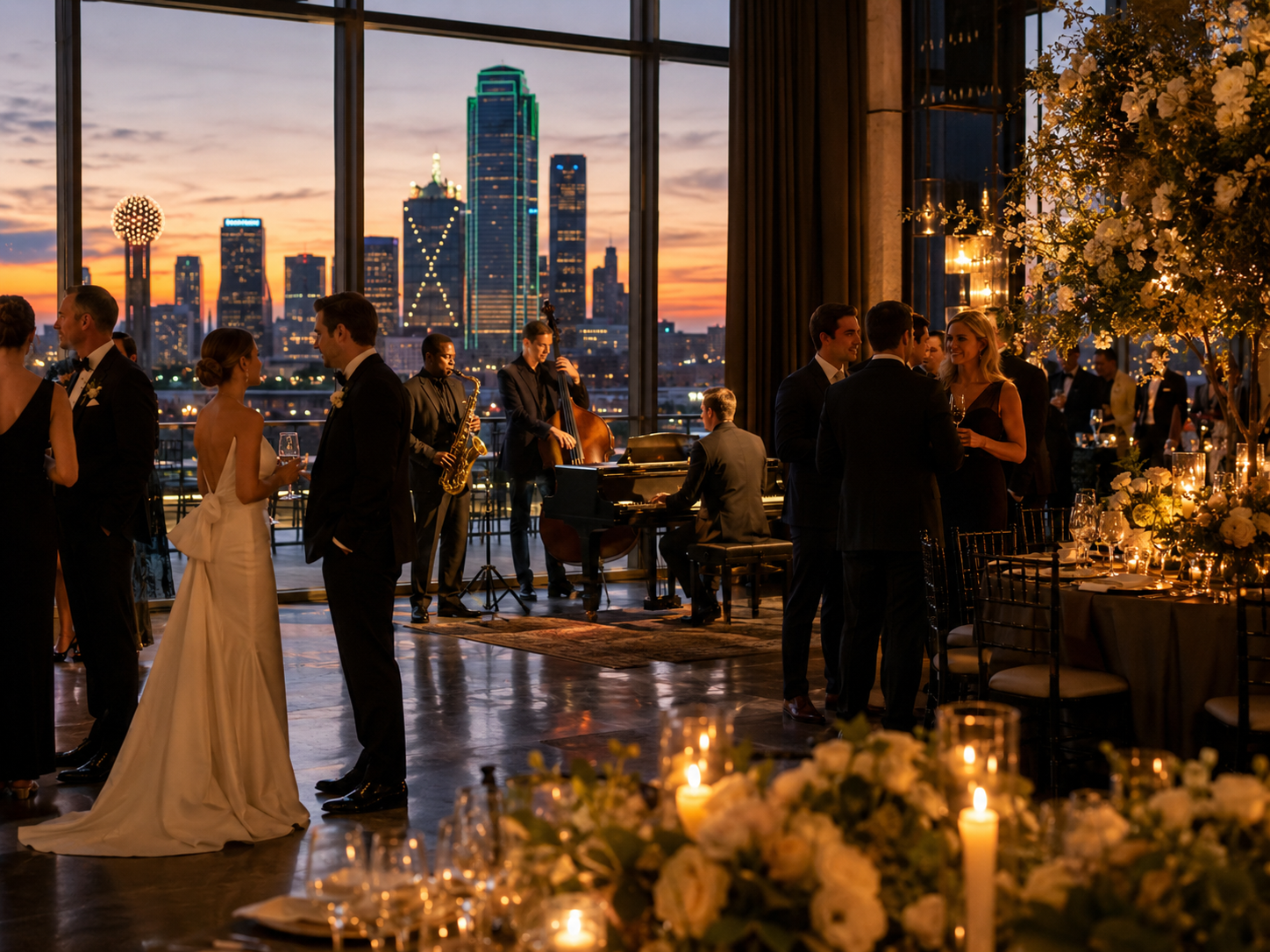
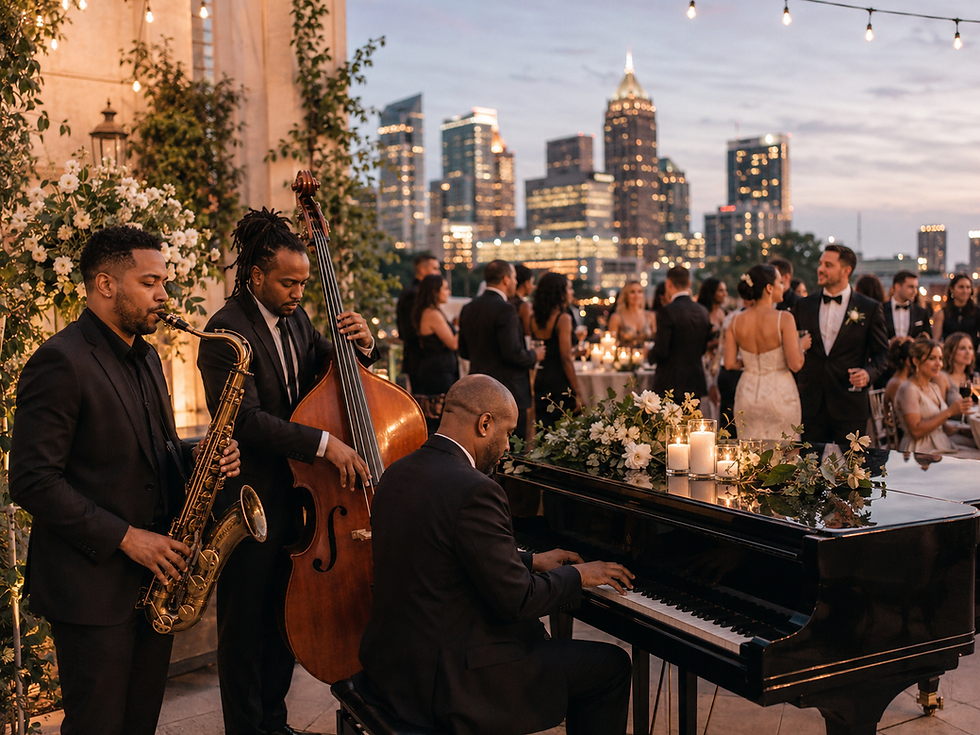
A waterfront cocktail hour usually benefits from music that feels lively without demanding attention. A trio with piano or guitar, bass, and saxophone can provide rhythmic energy while keeping conversation comfortable. A vocalist adds warmth, but the sound check should confirm that lyrics remain clear without overpowering nearby tables.
Think in terms of musical color. Brazilian jazz, bossa nova, elegant swing, and familiar standards can all feel at home in South Florida. The goal is not to play every style associated with Miami. It is to select a coherent palette that complements the setting, the couple’s background, and the reception that follows. A thoughtful live jazz band in Miami can also weave in instrumental versions of contemporary songs without turning cocktail hour into a dance set.
Plan for heat and direct sun
Even in October, Miami warmth and humidity affect musicians, instruments, and guests. A shaded performance area is essential; an umbrella that covers only part of the group is rarely enough when the sun moves. Confirm the shade footprint at the actual performance time, not during a morning site visit.
Allow airflow around the ensemble and keep electrical connections away from condensation, wet grass, and service traffic. Acoustic instruments can react to rapid temperature changes, so avoid placing the group directly beside an open door where cold indoor air meets humid outdoor air. Water for the musicians, a nearby staging area, and a realistic break schedule are small details that protect the quality of the performance.
Treat the rain plan as Plan A in another room
South Florida showers can arrive quickly. “We will move inside if needed” is not a complete plan unless someone has identified the exact room, performance position, power source, and decision time. Ask the venue when the weather call must be made and who has authority to make it. Then include that checkpoint in the wedding timeline.
The indoor location should create the same welcoming effect as the terrace. Harrison Jazz Ensemble helps planners reduce stress by preparing an alternate setup and adjusting instrumentation or amplification to the room. If moving the full ensemble would take too long, a pre-positioned smaller configuration may keep music continuous while staff redirect guests.
Control volume around conversation zones
Wind disperses sound outdoors, which can tempt people to increase volume too far. Instead of making one speaker louder, consider modest, evenly distributed amplification aimed toward the guest area and away from neighboring properties. Place the bar and high-top tables where people can enjoy the music without standing directly in front of a speaker.
Walk the space during sound check. Listen at the entrance, the bar, the farthest table, and any lounge area. Guests should notice a consistent atmosphere, yet still be able to introduce themselves without raising their voices. If the cocktail hour includes older relatives or guests sensitive to sound, preserve a quieter edge of the space.
Build a sixty-minute musical arc
Cocktail hour should evolve. Begin with welcoming selections while the first guests arrive, add a little more rhythm once the bar is active, and finish with a recognizable tune that gently gathers attention. The last five minutes matter because they prepare people to move to dinner. An emcee announcement works better when the music has already created a natural sense of conclusion.
Share the reception entrance time, photography schedule, and any room-reveal plan with the band. If portraits run late, musicians can extend a set without repeating the emotional peak too early. If guests need to move sooner, the ensemble can shorten a tune cleanly instead of stopping mid-phrase.
Coordinate with the venue and creative team
Your planner, venue manager, caterer, photographer, and musicians should agree on four basics: setup location, power, weather decision, and transition cue. Include those items on the final production schedule. At waterfront properties near Biscayne Bay or the Intracoastal, also ask about noise limits, dock activity, and service routes that might affect the performance zone.
Photographers appreciate knowing when a featured song or energetic moment is coming. Catering teams need a clear signal before opening reception doors. Harrison Jazz Ensemble approaches these handoffs as part of the performance, reading the room while staying connected to the timeline. That coordination is what turns good music into a smooth guest experience.
Make the backup feel equally beautiful
The strongest Miami wedding plan does not depend on perfect weather. It gives guests the same emotional welcome whether they are on a bayfront terrace or inside a candlelit salon. Choose an ensemble that can adapt, create a rain location you genuinely like, and make the transition cues explicit. With those decisions made early, you can enjoy the view without watching the forecast all evening. Contact Harrison Jazz Band to Jazz up your event with Music

Comments